


Second Harvest Puts Food Waste Reduction at the Centre of Climate Action at COP31
The decisions that lead to food waste begin long before food reaches a landfill. At the United Nations Climate Conference (COP31), running from November 9 to 20 in Antalya, Türkiye, Second Harvest brought together Canadian and international experts to explore how better measurement can help change those decisions.
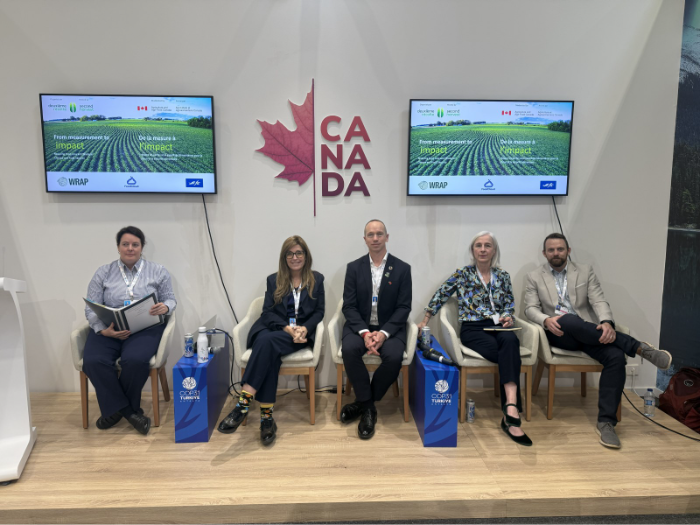
Held at the Canada Pavilion on Nov. 11, the panel, From Measurement to Impact: Reducing Food Loss and Waste for Climate and Food Security, examined how reliable data can guide policy, target investment and track progress across the food supply chain.
The discussion reflected Türkiye’s COP31 Action Agenda, which identifies zero waste and sustainable food systems among its priorities and emphasizes turning commitments into action.
Moderated by Sophie Beecher, director general at Agriculture and Agri-Food Canada, the session featured Second Harvest CEO Lori Nikkel; Adam Kehler, vice-president, sustainability, at Farm Credit Canada; David Rogers, chief partnership and growth officer at the Waste and Resources Action Programme (WRAP); and Angela Ruttledge, head of policy at FoodCloud.
Measuring impacts throughout the food system
“Our goal is to prevent food waste at the source. That means understanding where it happens, why it happens and what we can change. We need to measure the environmental impact across the whole food system, not just at the end of the supply chain,” said Second Harvest CEO Lori Nikkel.
Canada’s avoidable food waste has an estimated annual value of $58 billion and an environmental footprint of approximately 25.7 million tonnes of carbon dioxide equivalent, according to Second Harvest and Value Chain Management International’s 2024 research.
Reducing those losses can cut emissions and conserve the resources used to produce food. Reliable data helps identify which interventions can deliver the greatest benefits.
Using evidence to address the causes
The research identifies opportunities well before food reaches consumers. Processing and manufacturing account for 32 per cent of Canada’s avoidable food waste, highlighting the importance of examining production practices, storage, transportation and commercial relationships.
Date coding is another example. Best-before dates and associated practices are linked to 23 per cent of avoidable food waste between processing and purchase. Consumer confusion about quality and safety plays a role, alongside supply-chain practices that can cause edible food to be removed from sale.
Addressing these causes requires public education and practical reforms, including clearer distinctions between quality and safety information and the removal of unnecessary best-before dates from shelf-stable foods.

Canada’s CSA K100 standard provides common terminology, measurement guidance and an environmental framework. The international standard ISO 20001 helps organizations integrate food loss and waste prevention into their operations and management.
Together, these tools can support credible baselines, clearer objectives and consistent tracking of progress.
From better data to better decisions
Knowing the scale of the problem is only the beginning. Businesses also need practical approaches to preventing waste and managing edible surplus.
"We not only need to measure our waste, at business level, we need to know how much edible surplus food is available, and much of that is redistributable. We need to be helping businesses create food waste prevention roadmaps that incorporate resolutions enabling us to use food where it has most value: feeding people," said Angela Ruttledge, head of policy at FoodCloud.
During the panel, Second Harvest also highlighted practical opportunities for governments to support prevention through procurement, funding decisions and local initiatives.
The inclusion of food waste plans and food rescue strategies in the application process for infrastructure investments under Canada’s new National Food Security Strategy is a good example of government-led initiatives.
Shared approaches and practical support can also help organizations with different resources and capacities participate in measurement.
Preventing waste and addressing food insecurity
Second Harvest’s CEO emphasized that preventing food waste and addressing food insecurity require distinct responses. Sharing safe surplus food helps meet immediate needs, but increasing donations is not a substitute for preventing waste at its source.
The long-term environmental goal is to correct the failures that generate surplus and waste across the food system, so we use fewer resources producing food that will never be eaten.
“We will continue getting surplus food to people who need it. But people should not have to depend on surplus food to have a healthy meal. Alongside food waste prevention, we need poverty reduction strategies and economic policies that address why people cannot afford the food they need,” said Lori.
As prevention efforts reduce surplus food, that transition must also account for the charities and non-profits that currently rely on it.
The panel brought these responsibilities into the same conversation: prevent waste, protect natural resources and ensure that people can meet their food needs.
For Second Harvest, moving from measurement to impact means using evidence to change how food is produced, managed and valued, while advancing a future where everyone can afford the food they need for themselves and their families.


